
Where Cudahy City Directories Are Kept
The best confirmed starting point is the Los Angeles County Library’s Californiana collection, not a claimed online Cudahy volume. The collection holds city directories dating from the nineteenth century, but the exact Cudahy run, publisher years, reverse-directory run, and digitized sample page were not verified online. The table separates confirmed holdings from gaps that need a catalog check.
| Collection | Years | Where Held | Access |
|---|---|---|---|
| LA County Library Californiana city directories | Dating from the 19th century; exact Cudahy run unpublished online | Norwalk Library closed stacks | Contact staff before travel |
| Californiana census schedules | 1850-1910 | Norwalk Library closed stacks | Library research support |
| Alta California | 1849-1891 | Norwalk Californiana collection | Paper or microfilm access |
| Los Angeles Star | 1851-1879 | Norwalk Californiana collection | Paper or microfilm access |
| Federal census | Through 1950 public under the 72-year rule | NARA and official partners | Pair with nearby directory years |
| Los Angeles naturalization series | 1852-1915; federal indexes 1887-1931 and 1915-1976 | NARA Riverside | Free research-room databases and holdings |
| California probate estate files | 1833-1991 | FamilySearch, place-filtered to Los Angeles County | Images may require login or an affiliate center |
Printed city directories and their companion sources answer different questions. A name-first listing may show an address and occupation. A census schedule supplies a household snapshot. A newspaper may explain a move or death. Probate files can connect an older name to heirs. A careful city directory search keeps those roles separate rather than treating one volume as a full resident list.
The Norwalk Californiana Shelf
The closed-stack Californiana collection at Norwalk Library, 12350 Imperial Highway, is unusually large. LA County Library describes more than 24,000 books and more than 200 periodical and newspaper titles, alongside California census schedules from 1850 through 1910. Those numbers make the collection useful when a narrow Cudahy city directory search turns into a county or neighborhood investigation.
See the LA County Library local-history and Californiana collection information before planning a research visit.
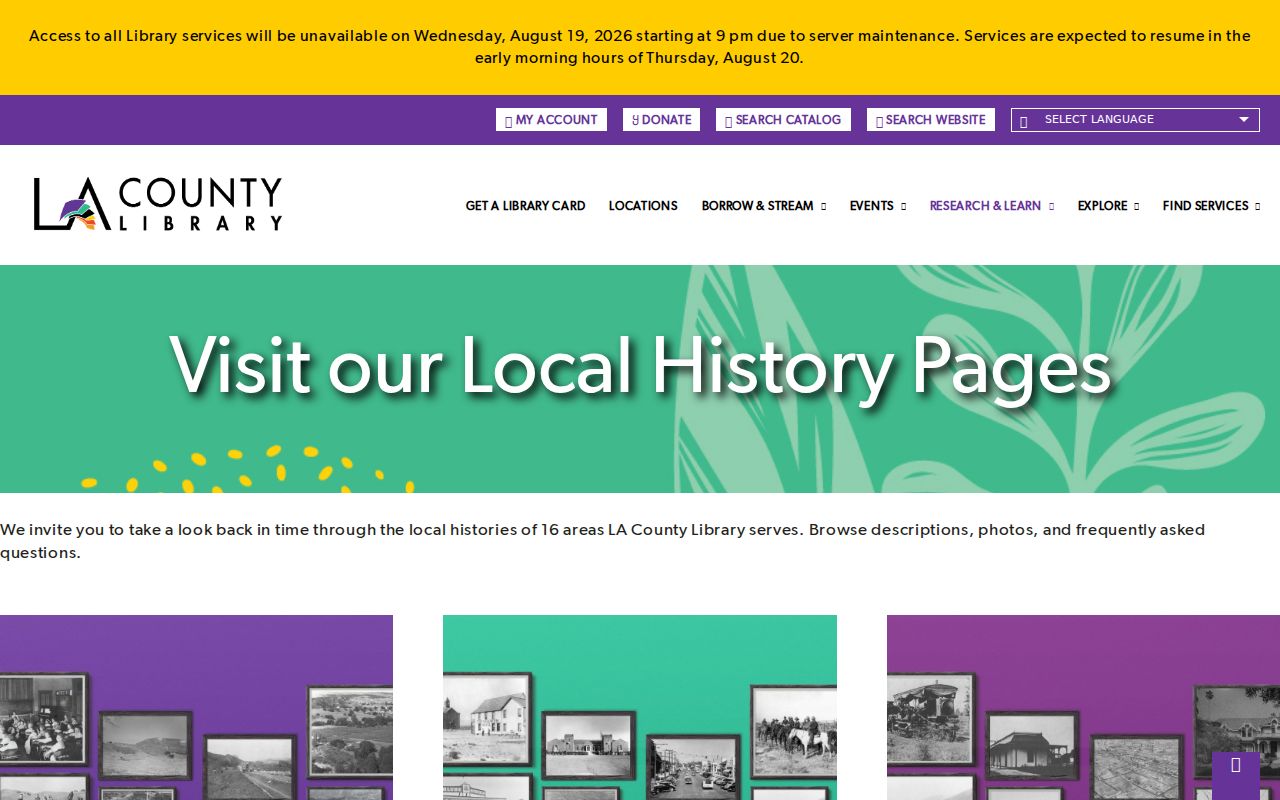
The Cudahy branch can help with a local starting question, while the Norwalk closed stacks hold the broader genealogy, directory, newspaper, and census material. Exact shelf availability is not published as a Cudahy-by-year list. Contact library staff first, describe the surname, address, and date range, and ask whether a staff-mediated retrieval or a related Los Angeles-area volume is the right match.
That step matters because a catalog label can describe a regional run rather than a separate Cudahy book. It also prevents a wasted trip based on a guessed publisher or a reverse-directory year. The confirmed collection is broad; the local run still needs confirmation.
Note: The Norwalk collection has confirmed depth, but the exact Cudahy and reverse-directory volumes remain a staff verification question.
Before the Cudahy City Directory
Cudahy incorporated on November 10, 1960. That date changes the catalog search. A person living in the area before incorporation may be indexed under Los Angeles County, Cudahy Ranch, or an adjacent-place heading instead of a standalone Cudahy city directory. The 1950 census also predates the city, so its enumeration geography will not use the later municipal boundary as the main key.
Michael Cudahy bought several thousand acres in 1893. After his death, the Cudahy Ranch Company became a useful bridge between the early land story and later local records. The ranch name is a research clue, not proof that a person appeared in a specific directory. Search the wider county shelf, newspaper notices, and land references when a modern city-name query comes up empty.
Use the place label as a hypothesis. Keep the street, tract, household surname, and nearby city in a research note. Then test the same person against a directory, a census household, or a dated land record. This approach respects the way historical catalogs were made and reduces false gaps caused by the later city boundary.
Read a Cudahy City Directory Entry
No authoritative digitized Cudahy or Los Angeles sample page was verified, so an example entry should not be presented as a confirmed local page. Instead, use the following as an inventory of fields to verify in the retrieved volume. Read the page as a dated publication record, then compare its marks with that volume’s own instructions.
| Surname and given name | Record the spelling exactly, including initials, punctuation, and any compound-surname form. |
|---|---|
| Spouse in parentheses | A spouse may appear after the named person. Treat the notation as a clue to test against a census or probate file. |
| Widow notation | A widow marker can help explain a changed household name, but the date and identity still need a second source. |
| Occupation or employer | Copy the printed occupation or employer reference as a historical identifier, without treating it as residence proof. |
| Residence or business prefix | Note whether the address is presented as a residence or business, then retain the full street wording. |
| Address and owner/renter mark | Capture the house number, street, and any owner or renter symbol exactly as the volume defines it. |
A directory entry can point to a household, but it does not prove that every person at the address was listed. It may omit children, use one head of household, or follow a publisher’s selection rule. An address can also belong to a business listing rather than a home. Copy the page number and volume citation along with the name.
Cudahy Directory Abbreviations Need the Key
Short marks are useful only after their meaning is confirmed in the same volume. A mark that looks familiar in one city directory may have a different meaning in another. Photograph or transcribe the abbreviation key before working through names, addresses, and symbols.
Directory reading box. Three terms organize the page. Each one needs a volume-specific check.
- Criss-cross directory
- A reverse or address-ordered section that, if cataloged for the run, sorts by street and house number and may include a telephone number. Cudahy’s exact runs were not verified.
- Householder index
- A name-first aid to people listed as household heads or principal entries. It is an index to the publication, not a complete household census.
- Abbreviation key
- The publisher’s guide to symbols and short forms. Record the actual key from the retrieved volume instead of borrowing definitions from another publisher.
When a key is missing from a scan, ask the library whether the front matter, spine label, or companion volume contains it. Preserve the original wording in notes. That small act keeps an inferred meaning from becoming a false fact in a family-history file.
Criss-Cross Pages in Cudahy Directories
A name-first city directory begins with a person. A criss-cross section reverses the path: start with a street and house number, then look for the listed subscriber or occupant. If a Cudahy reverse directory is cataloged, it can help bridge an old address to a surname, but the cataloged year and publisher must be recorded before relying on it.
Use the sequence name or address → volume year → street line → house number → nearby census. The reverse page may show a telephone number, but an absence can mean an unlisted number, a missing volume, or a publication rule. It cannot establish that every person living at the address appeared in print.
For a current parcel question, the work changes from a historical directory to the county’s address-keyed assessor and GIS records. The Cudahy street directory workflow handles that modern parcel handoff, while the city directory shelf supplies the older name and address context.
Note: No authoritative Cudahy reverse-directory years, publisher list, or Sanborn map years were verified, so each catalog claim needs a source note.
Naturalization Records Add a Name Trail
Directory research can gain a second name trail from Los Angeles naturalization records. NARA Riverside, at 23123 Cajalco Road in Perris, offers free research-room databases and federal holdings for Southern California. The Los Angeles Superior Court naturalization index covers 1852-1915. Federal Los Angeles indexes cover 1887-1931 and 1915-1976, with declarations and petitions extending into the 1990s.
Review NARA Riverside genealogy resources for the research-room and federal-holding context.
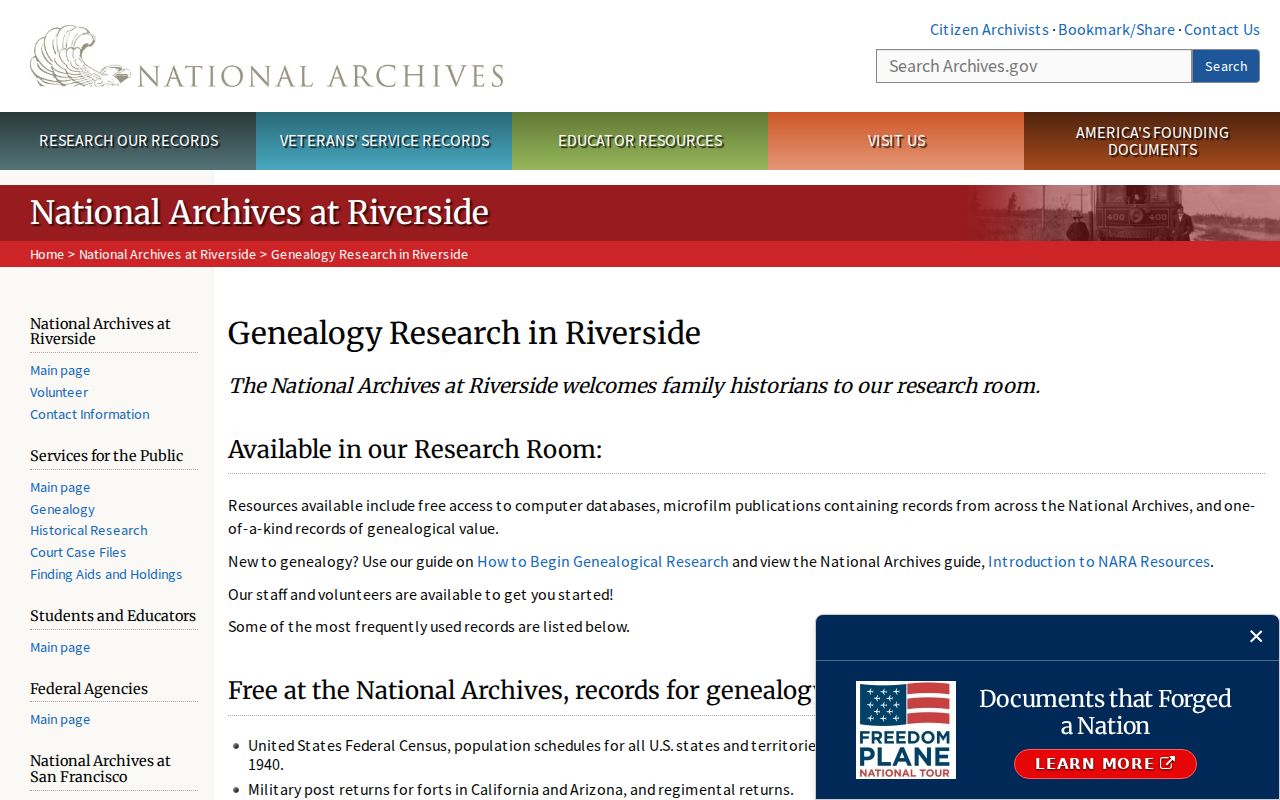
These records can add residence, nationality, arrival, witnesses, and name-change evidence. They do not replace a directory entry. Use a directory address to form a lead, then check the naturalization name, date, and residence details. Conversely, a naturalization record can provide a spelling or arrival clue for a difficult directory search.
The Los Angeles naturalization finding aid is the more focused route when the goal is a series and date range rather than a broad genealogy orientation.
Open the Los Angeles naturalization records finding aid before making a request or research-room plan.
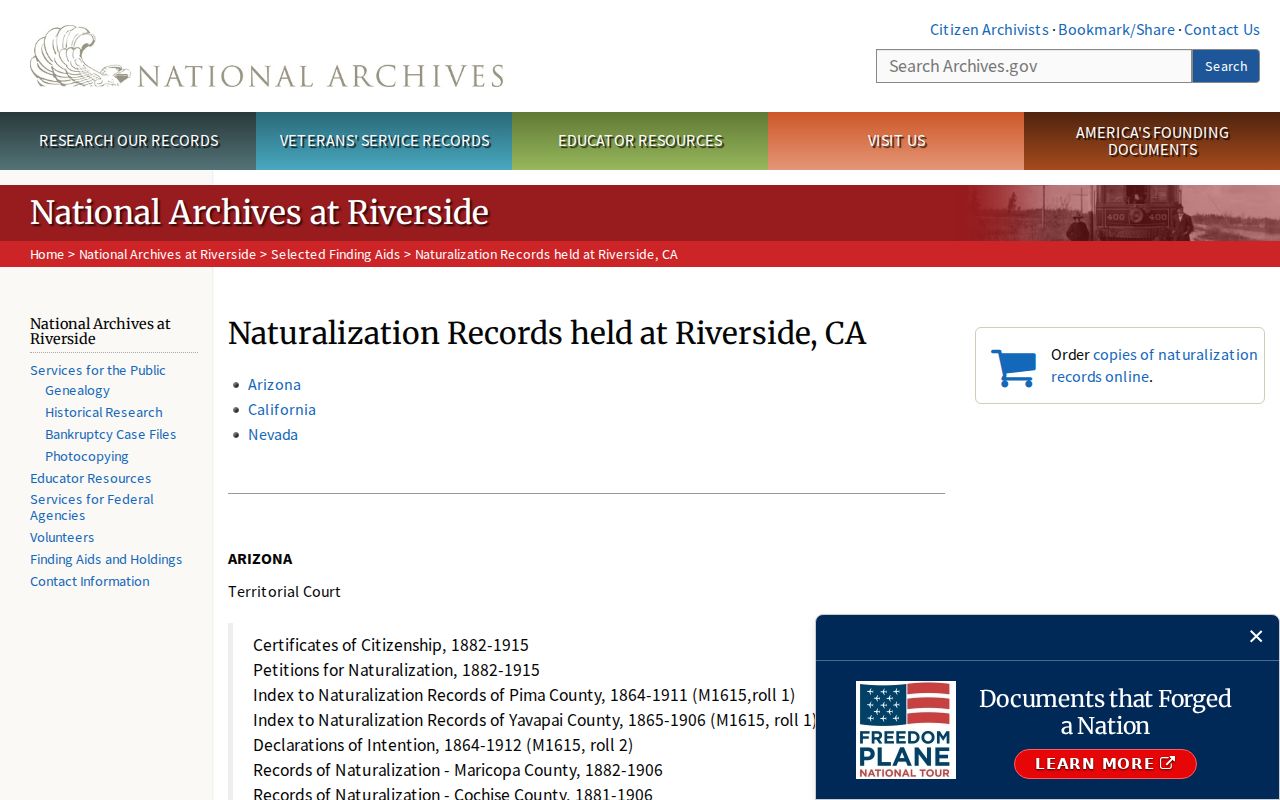
The naturalization image belongs beside the directory workflow because it shows how a name can be tested in a second record family. Keep the two citations separate. A shared surname alone is not enough to merge two people.
Pair Cudahy Directories with Census
Federal census schedules through 1950 are public under the 72-year rule. They supply household composition, ages, birthplaces, and occupation at an enumeration point, while a city directory can fill a year between census snapshots. The most useful pairings for a Cudahy family trail are the 1930, 1940, and 1950 census years with the nearest retrieved directory years.
Because 1950 predates Cudahy incorporation, search the historical address and enumeration geography rather than assuming a later city label. The same caution applies to the 1930 and 1940 records. A person may appear under Los Angeles County, Cudahy Ranch, or an adjacent-place heading even when the later street name looks familiar.
- Write down the directory name, full address, spouse or widow notation, and the volume citation.
- Find the nearest 1930, 1940, or 1950 census household and compare names, ages, birthplace, and address geography.
- Mark what matches and what does not. A different spelling or household member is a research question, not automatic proof of a second person.
- Check the next directory year for a move, disappearance, new spouse notation, or changed street number.
- Use probate, newspapers, or a naturalization record to explain a departure when the dated sources point to the same household.
This process turns a thin city directory line into a dated household sequence without claiming that any one source is complete. Keep the exact place label used by each source.
Note: The public census endpoint is 1950 for this workflow, and its geography predates Cudahy’s municipal incorporation.
Cudahy Ranch Starts the Directory Trail
The 1893 purchase of several thousand acres by Michael Cudahy gives an early land-history clue that a later city directory cannot supply by itself. After his death, the Cudahy Ranch Company became a useful bridge for searching names, land references, and newspaper notices before the city had its 1960 municipal identity.
This story helps explain why a modern Cudahy query can feel absent from older shelves. The place was part of a broader county landscape, and publications often organized people by a regional town, county, tract, or nearby community. Search the surname with Cudahy Ranch and Los Angeles County variants, then compare the result with the dated address and household sources.
Do not turn the ranch connection into an invented directory publisher or an assumed roster. It is a historically supported search bridge. The record value comes from testing the bridge against a retrieved volume, census schedule, newspaper notice, deed, or probate file.
Close a Cudahy Directory Gap
A missing directory year does not end a household trail. Use the last confirmed entry, the first later entry, and the address or surname that links them. California probate estate files from 1833 through 1991 can add heirs, relationships, and inventories when a person died or left an estate. Images may require a FamilySearch login or an affiliate-center visit.
Newspapers and obituaries can explain a move, death, marriage, or name change. Search compound surnames in full, separately, joined and unjoined, with and without accents, and in reversed order. These variants are prudent indexing checks in Cudahy, not a basis for inferring identity or ethnicity.
Regional discovery layers can point to a useful lead when the Norwalk catalog is not enough. Check the Los Angeles Public Library California Index and TESSA photographs, the California State Library California History Section, UCLA Special Collections, WorldCat, and Cudahy city meeting or commission records. No public HOA, union, congregation, or funeral roster specific to Cudahy was verified, so those categories should not be treated as established collections.
View the California Unclaimed Property name-search portal as a separate official name lead when a family file raises a possible missing-property question.
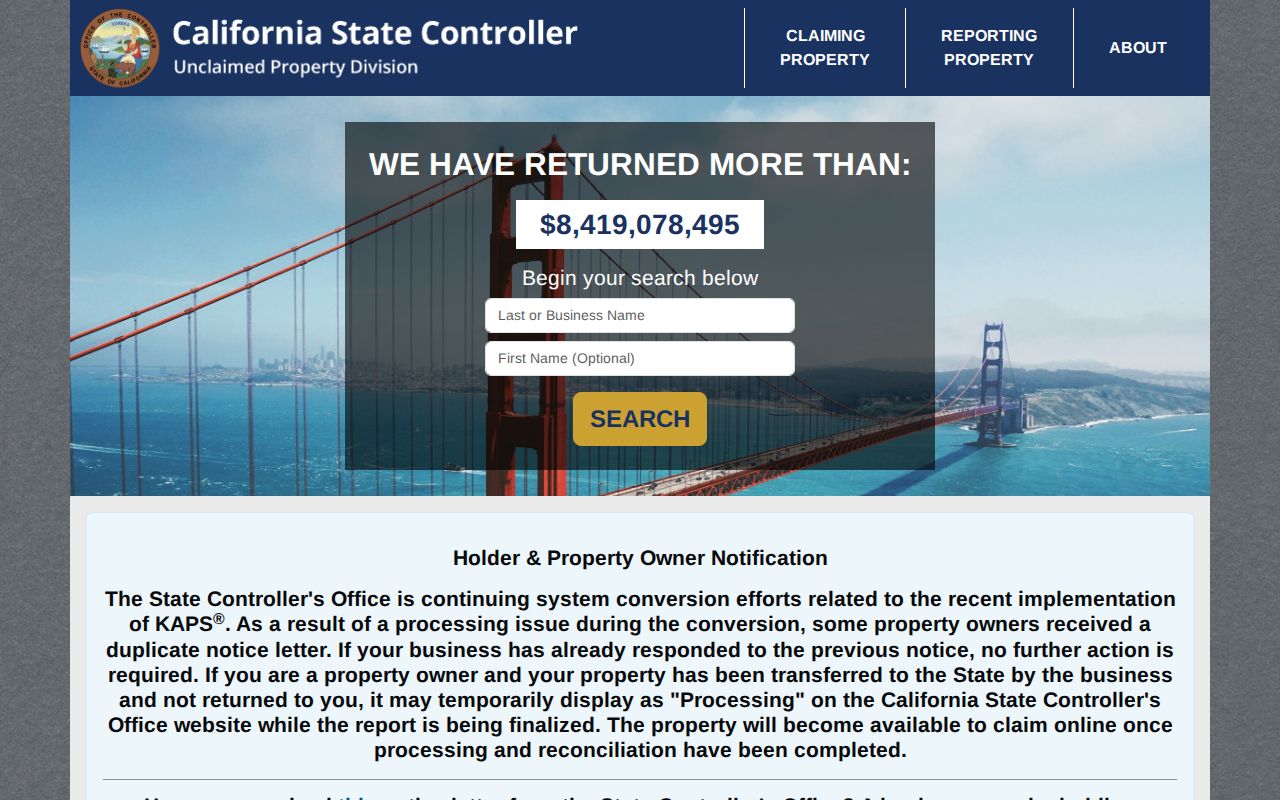
Unclaimed property is not a city directory and does not prove that a person lived at a historic address. Its value is limited to a name-based lead that must be checked against the relevant custodian. The same discipline applies to every gap: preserve the source, date the clue, and do not fill an unverified run with a guess.
Research boundary. The confirmed Cudahy city directory resource is the Los Angeles County Library’s broader Californiana collection. Exact local runs, reverse volumes, and sample pages require staff or catalog verification.
Note: A careful citation can say that a run was not located; it should not turn an unverified absence into a claimed publication gap.