
Cudahy Previous Residents by Era
Different records answer different parts of a Cudahy address-history question. The Los Angeles County Registrar-Recorder/County Clerk holds property records from 1850 to the present, while the public federal census reaches through 1950. Directories reach into nineteenth-century Los Angeles-area collections, but the exact Cudahy run is not published online. The table keeps those limits visible before a search begins.
| Source | Years It Covers | Where Held | What It Shows |
|---|---|---|---|
| RR/CC property records | 1850-present | Los Angeles County RR/CC counter and request channels | Grantors, grantees, instruments, dates, and legal descriptions |
| Los Angeles County Assessor roll | Current roll; parcel-dependent base-year history | Assessor property search, PDB, counter, and phone service | AIN, assessee, situs, parcel facts, and assessment history where available |
| Federal census | Through 1950 public under the 72-year rule | NARA and official partners | Households, ages, birthplaces, occupation, and residence geography |
| Los Angeles-area city directories | Dating from the 19th century; exact Cudahy run not located | LA County Library Californiana, Norwalk closed stacks | Listed names, addresses, and publication-year household clues |
| California probate estate files | 1833-1991 | FamilySearch, place-filtered to Los Angeles County | Heirs, relationships, addresses, and inventories |
| Cudahy permits and code files | Start year not located | City Building & Safety or a Cudahy public-record request | Work and applicant or owner information as recorded |
| Sanborn maps | Exact Cudahy sheet and year not located | No authoritative local run verified | No claim about footprint or use until a sheet is confirmed |
Start with the source that matches the question. A title chain is the route for prior owners. A directory or census is the route for past occupants. A permit can mark a building event but does not create a continuous household list. A probate file can explain why an owner disappeared from later records.
Start the Cudahy Records Trail
The Los Angeles County Assessor’s free property search is the first handoff for a current Cudahy address. Search by full situs address or AIN. The address autocomplete can supply city, ZIP, and AIN details, while the AIN preserves the parcel identity even when a street label changes. The Assessor’s GIS map can then show the parcel geometry and nearby AINs.
Open the Los Angeles County Assessor property search and record the current AIN, situs address, legal description, and any visible base-year facts. The free tool is address and AIN oriented. It does not offer a free owner-name browse.
The owner-name path is different. Assessee-name access runs through the Assessor Property Database, a regional office terminal, or telephone service. Remote PDB terms are listed as $100 per month plus $1 per inquiry, a $168 token renewed every three years, and a $200 trust account. Free counter or phone alternatives matter when a name is known but the parcel is not.
Do not treat an assessee mailing address as proof of occupancy. It is correspondence geography. A trust or LLC may hold title, and the physical situs remains the parcel key for the next step.
Cudahy Deed Records Have No Online Index
Los Angeles County RR/CC property records reach back to 1850, but the Recorder does not provide a public online deed index. Recorded instruments are indexed by grantor name, grantee name, and recording year, not by street address or APN. That is why an address-only search cannot reveal a clean list of Cudahy previous residents.
The practical chain is address to AIN, AIN to current assessee, and current name to Recorder party and year. RR/CC mail requests need a document number or party name, recording year, and document title. A narrow request is more useful than a vague search for every deed at an address.
Review the RR/CC real-estate-records request channels before choosing a counter, mail, or copy-order route.
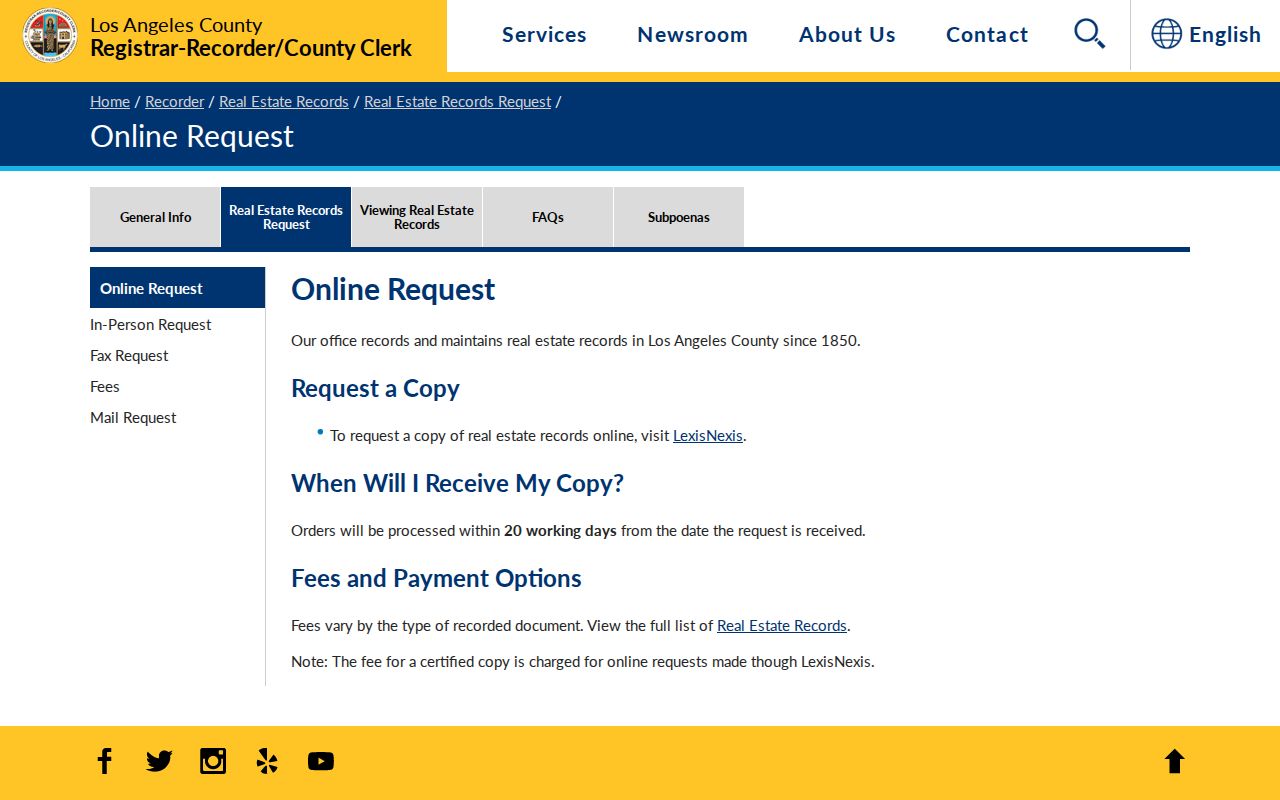
Plain copies cost $5 for the first page and $3 for each additional page. Certified copies cost $6 for the first page and $3 for each additional page. A mail name search is $0.50 per name per year with a $1 minimum. Online copy orders are normally processed within 20 working days.
The counter is Room 2207 at 12400 Imperial Highway in Norwalk, Monday through Friday from 8 to 5. The main service number is 800-201-8999. These channels are part of the title trail because discovery and copy retrieval are separate tasks.
Note: RR/CC property coverage begins in 1850, but public online deed discovery is not available by address or APN.
Trace Cudahy Previous Residents Backward
Once the current parcel is identified, walk the chain one transfer at a time. The newest acquisition deed supplies the first prior seller. Each seller then becomes the next name to test as an earlier grantee. Keep a table of names, dates, document numbers, and descriptions so a similar surname does not silently become the wrong person.
- Start with the current AIN and assessee, then locate the newest acquisition deed connected to that parcel.
- Record the grantee, grantor, recording date, document number, and complete legal description from the deed or index entry.
- Search the seller as a prior grantee, constrained by the recording date range and the same legal description.
- Repeat the handoff backward. If a name or tract changes, preserve the old form and mark the point that needs staff review.
- Request the relevant recorded copy through RR/CC when the index entry or title question needs the actual instrument.
Deed-chain definitions. Three terms keep an address-history search precise.
- Grantor and grantee
- The grantor transfers an interest. The grantee receives it. In a backward search, today’s seller may be the earlier grantee.
- Chain of title
- The linked sequence of recorded transfers for one parcel, checked from the current instrument toward earlier instruments.
- Legal description
- The tract, lot, block, map book and page, or other parcel wording that identifies the land more reliably than a changing street label.
The deed chain establishes titled ownership, not everyone who lived at the address. It also does not tell where a seller moved. Use household sources for those questions.
Keep Cudahy Records with Legal Descriptions
Street names are easy to search, but legal descriptions are better anchors for a long address history. Preserve the tract, lot, block, and map book or page whenever a deed, assessor record, or map gives them. The AIN uses a mapbook-page-parcel pattern, normally ten digits, and should be copied with the source date.
Addresses can be written in different ways across a city directory, census schedule, permit file, and deed. A mailing address can differ from the physical situs. A legal description can remain stable when a street label, number format, or postal city changes. No authoritative Cudahy street-renumbering table was verified, so do not invent a crosswalk.
Sanborn map coverage is also unresolved for Cudahy. A footprint, use, or map year should be cited only after a specific sheet is located. Until then, use the AIN and legal description as the parcel bridge, then compare dated sources that actually name the address.
Past Cudahy Residents in Directories
Deeds identify titled parties. City directories and census schedules can show listed occupants, including people who did not hold title. That distinction is central to previous-resident research. A directory line may show a name, address, occupation, spouse notation, widow marker, or owner/renter symbol. A census adds a household snapshot, but neither source promises a complete list of everyone present.
LA County Library’s Californiana collection at Norwalk holds city directories dating from the nineteenth century, along with newspapers and census schedules. The exact Cudahy directory and reverse-directory runs are not published online. Contact staff before travel and ask for the surname, address, likely year, and broader place headings. Pre-1960 people may be listed under Los Angeles County, Cudahy Ranch, or an adjacent place.
Michael Cudahy’s purchase of several thousand acres in 1893 and the later Cudahy Ranch Company provide a useful early land-history bridge. That name can guide a pre-incorporation search, but it is not a substitute for a dated directory, deed, census household, newspaper, or probate citation.
Cudahy incorporated on November 10, 1960. A prior resident may therefore appear in a county or ranch-era source even when the present address sits inside the incorporated city. Keep that historical jurisdiction split beside the parcel notes.
The Cudahy city directory collections provide the detailed shelf and entry-reading method. For a previous-resident trail, use only the pieces needed to date an occupant, connect a surname to the parcel, or explain a gap between title transfers.
Keep the original volume title, year, page, and abbreviation key. If a criss-cross section is cataloged, it may sort by street and house number and may show a telephone number. The actual publisher, year run, and key must come from the retrieved volume.
Pair Cudahy Directories with Census
The federal census through 1950 is public under the 72-year rule. Pair a retrieved directory year with the nearest 1930, 1940, or 1950 household. The directory can fill the years between census points, while the census tests household composition, ages, birthplaces, occupation, and historical place geography.
Because the 1950 census predates Cudahy incorporation, do not demand a later municipal label from an earlier schedule. Search the enumeration geography and the historic address. The same name may appear under the county, Cudahy Ranch, or a neighboring place. Record the source’s own place wording instead of silently modernizing it.
- Begin with the dated directory entry and write down every name, address form, spouse or widow notation, and citation.
- Locate the nearest 1930, 1940, or 1950 census household and compare names, ages, birthplace, and address geography.
- Mark a match only when more than the surname agrees. A middle initial, family member, date, or parcel clue can separate same-name people.
- Check the next directory year for a move, changed street number, disappearance, or new household notation.
- Use a deed, probate file, obituary, or newspaper notice to explain the change, then keep the source roles distinct.
A person who disappears from a directory may have moved, died, changed a household name, or simply fallen outside the publication rule. The next dated record narrows the possibilities; it does not answer them alone.
Note: Pairing a directory with 1930, 1940, and 1950 census households fills gaps without treating either source as complete.
Cudahy Probate Records Close the Trail
Probate is a useful endpoint when a prior owner or listed resident dies, leaves heirs, or appears in an estate file. California probate estate files from 1833 through 1991 can be searched statewide through FamilySearch with a place filter for Los Angeles County. Images may require an account or an affiliate-center visit. The file may add relationships, addresses, petitions, and inventories that a deed does not show.
Obituaries and newspapers provide another bridge. A notice can explain a move, a death, a marriage, or a name change between two directory years. Search the full surname, separate surname parts, joined and unjoined forms, accents and no accents, and reversed order. Use each result as a dated clue, then compare it with the parcel and household sources.
Superior Court records can help with a probate or civil name lead, but court access is not the same as a resident directory. Los Angeles Superior Court name searches are paid and division-specific. Remote access is narrower for sensitive case types, while a courthouse public terminal may show more public material in some categories.
Read California court rules for viewing electronic case records before treating a remote result as the full file.
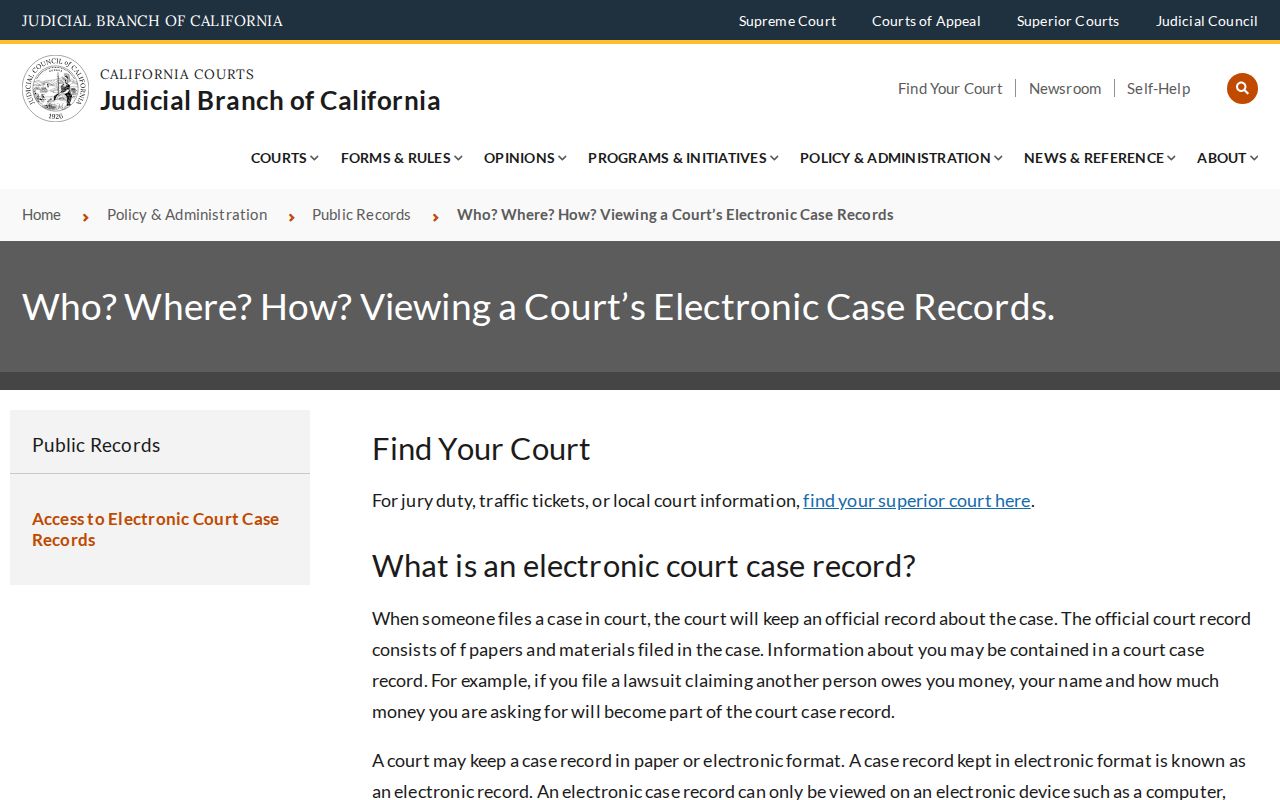
The court-access image belongs in the trail as a boundary check. A case result can confirm a party name or event, but it does not by itself prove that the party lived at the Cudahy address. Keep the case citation and the address evidence in separate notes.
Lawful Research on Cudahy Previous Residents
Previous-resident research is appropriate for family history, a documented house history, estate work, and personal local curiosity. It should stop at the point where a record would be used to track, threaten, impersonate, or pressure a living person. Public availability does not make every use lawful, and a name match does not make an identity match.
Lawful-use boundary. Keep searches narrow, use the minimum information needed to test a historical question, and verify with the custodian. California law addresses stalking and repeated harassing communications, including Penal Code sections 646.9 and 653m. Do not use a Cudahy address trail to stalk, harass, or harm anyone.
Some official lookups are especially poor substitutes for a household record. The Los Angeles County Sheriff’s Inmate Information Center searches a custody system by last name, first name, date of birth, and CAPTCHA. It may return booking or court data where published, but it does not establish that a person once lived at a parcel.
Use the Los Angeles County Sheriff Inmate Information Center only for its stated custody purpose.
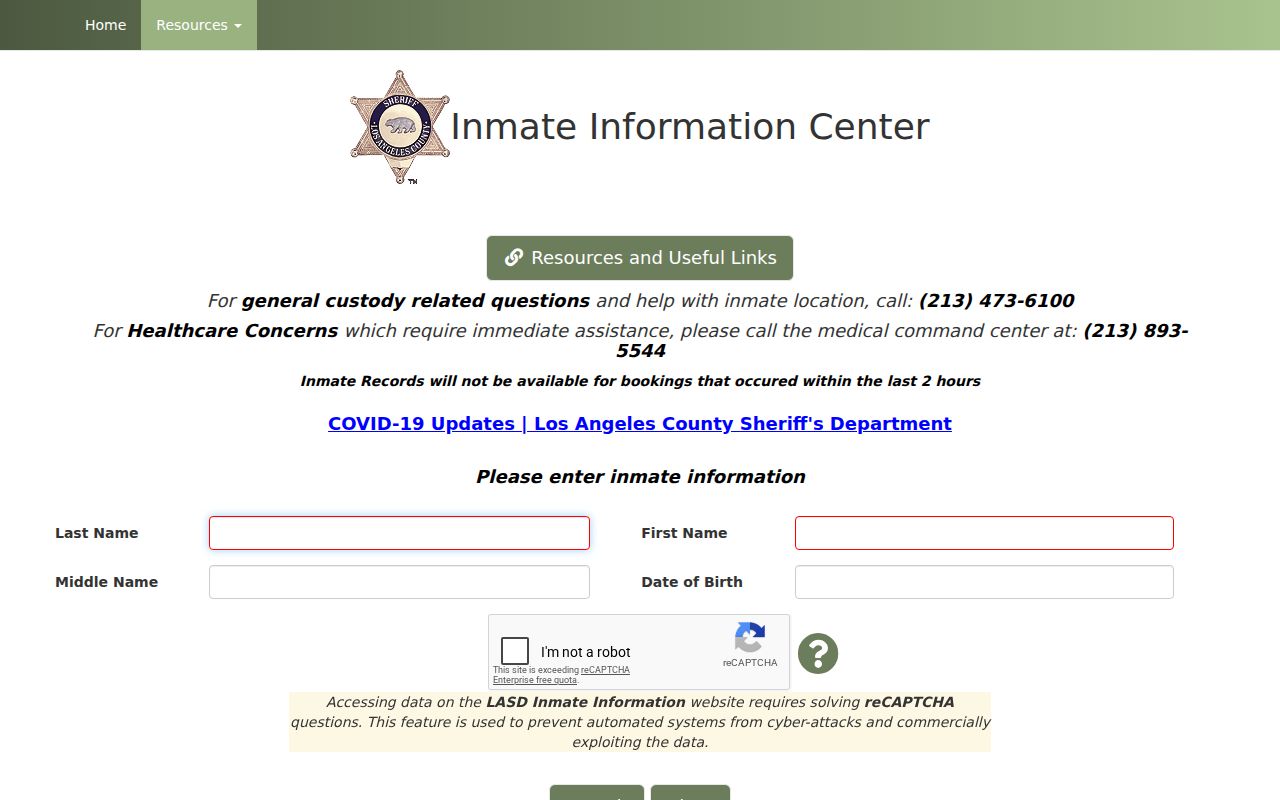
The LASD image is a reminder to keep a public search in its proper record family. A no-result proves only that the queried system did not return a match. It does not close a title, directory, or household trail.
The California Department of Corrections and Rehabilitation incarcerated-person locator is a separate state-prison route, searched by CDCR number or name. It also cannot establish that a person once lived at a Cudahy address.
California Megan’s Law is another distinct system. It supports a statutorily published registry search by name or address, map, or radius, with anti-harassment limits. It is not a historical directory and should not be used to assemble a list of people around an old Cudahy address.
Review the California Megan’s Law registry information and search boundary.
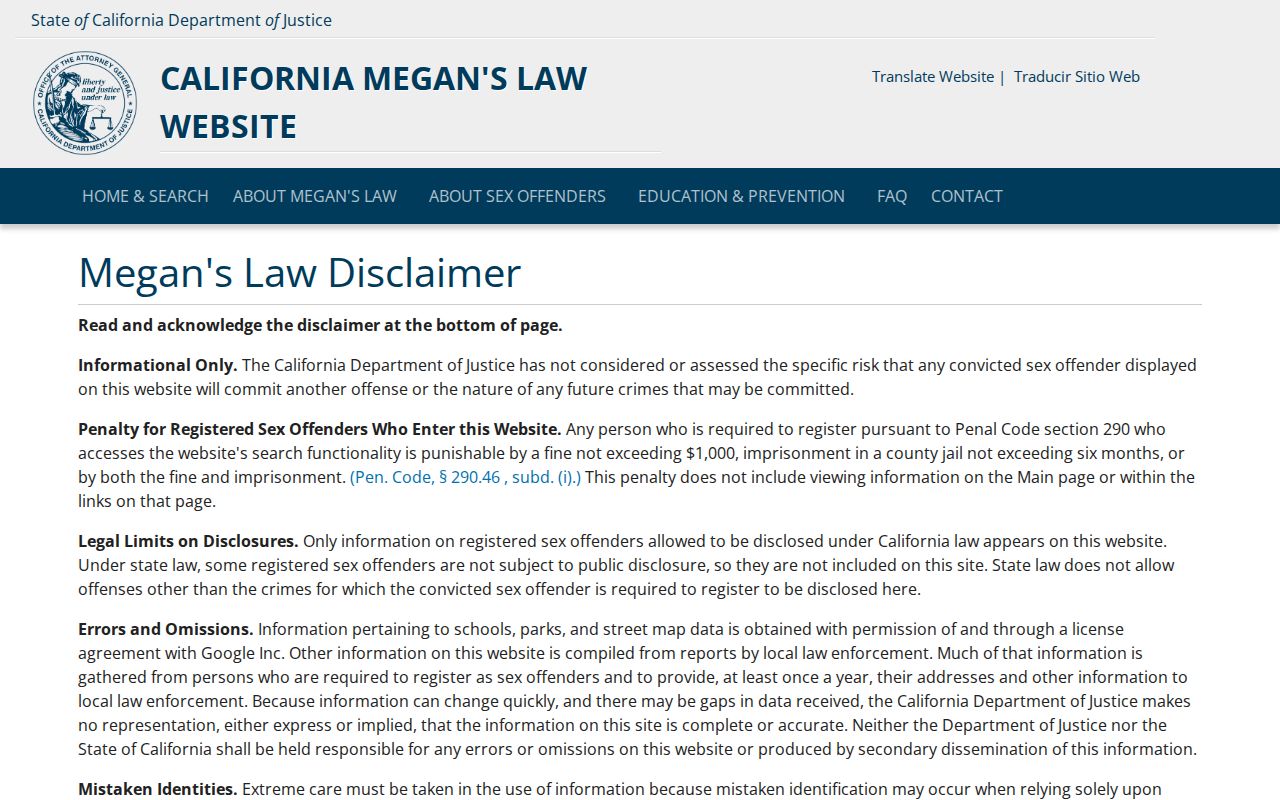
For a defensible address history, return to the AIN, deed chain, dated directories, census household, probate file, and newspaper evidence. Those sources can be cited and checked without turning a historical question into a present-day personal profile.